Research studies, service evaluation and audit are integral components of dietetic practice, and all members of the profession have a role to play in their delivery, as detailed with the BDA Dietetic Career Framework. However, distinguishing between these activities can be challenging, particularly for those who are new to the profession or to research, making it difficult to understand how research studies, service evaluation and audit differ.
Service evaluation
Service evaluations assess how effectively a service is functioning by answering the question, ‘how well are we going?’. They focus on evaluating the quality, effectiveness and efficiency of service delivery, and are used to identify strengths, weaknesses and opportunities for improvement. Areas that can be evaluated using service evaluation include, but are not limited to:
- Accessibility of services
- Equity of services
- Efficiency of services
- Resource utilisation
- Adherence to practice standards, protocols and processes
- Service user experience
- Collecting dietetic outcomes
- Staff experience
Unlike a research study, they usually don’t require ethical approval but may need organisational approval. See the ethical considerations section below.
Audit
Audits assess current practice against established standards such as national guidelines, , protocols, policies or recognised best practice. They address the question, ‘Are we doing what we should be doing?’ by determining whether practice is being delivered in line with agreed standards. Audits support improvements in safety and quality of care, strengthen governance and evidence collation and help to highlight any training or resource needs. Examples of areas that could be audited include:
- Record keeping
- Referral appropriateness
- Nutrition and hydration (e.g., MUST screening completion)
- Compliance with national or local clinical guidelines (e.g., NICE or trust protocols)
- Complaints handling
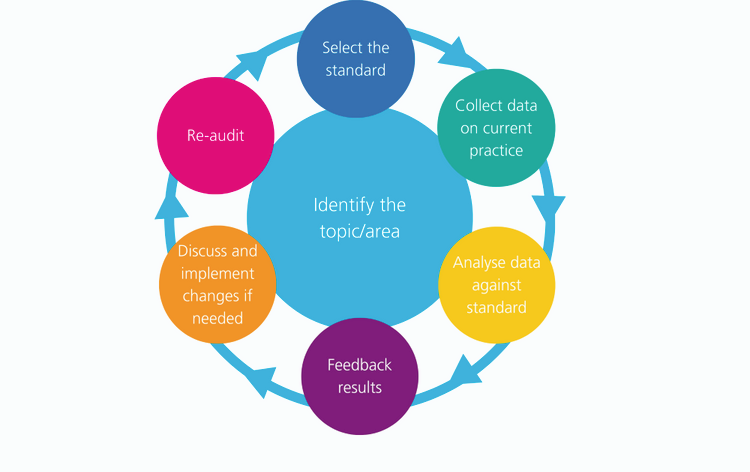
Audits typically follow a cyclical process as illustrated in the diagram below. When changes or improvements are identified, sufficient time should be allowed before re-auditing to ensure these can be fully implemented and embedded into practice.
Ethical considerations
Unlike research studies, service evaluations and audits, generally, do not require specific approval from an ethics committee, however, approval from your organisation or institution may be required. Ethical principles should still be adhered to, to ensure the protection of service users, staff and the organisation. Key principles to consider include:
- Consent
- Confidentiality and anonymity
- Data protection and privacy
- Equity
- Transparency
- Accountability
Supporting resources
- The Project or Research Decision Tool or Defining Research Table from the Research Ethics Service can help determine if your project is a research project, service evaluation or audit.
- The NHS Evaluation Toolkit can be used to help you improve services and outcomes, determine value and effectiveness, and make informed decisions. It’s primarily for those involved in health and care services, but may be useful to anyone hoping to conduct an evaluation.
- The Clinical Audit Support Centre contains a wealth of information on audits, providing resources and tools to support you through the process.
Useful links