

Enhanced practice is a level of practice, beyond the entry level, which already exists within our workforce. It is a distinct level of practice within a dietetic career that encompasses the largest proportion of dietitians, delivering the majority of services and where most dietitians will spend their entire career.
The BDA is committed to supporting members who choose to stay working at this level of practice as a career destination.

What is enhanced level practice?
Enhanced level practice is positioned between entry and advanced level practice. It is the level of practice where most of the workforce needs to be to deliver profession specific expertise. Many registered dietitians transition to enhanced level as they build their professional capabilities. It is a broad and highly valued level of practice and is vital for delivering safe and effective services across all settings.
Within enhanced practice, there is the opportunity for significant professional development, moving towards becoming an expert within a speciality and developing depth of expertise as a dietitian. It can be a precursor to advanced level, but only a small percentage of the workforce will transition into advanced and consultant level practice.
Roles and titles
Enhanced practice is not a job title or role. Dietitians working at this level of practice will have many different roles and titles. Examples include:
- Specialist Dietitian
- Team Leader
- Dietetic Programme Lead (in a university)
- First Contact Dietitian
- Clinical Lead
- Senior Dietitian
- Advanced Dietitian
- Highly Specialist Dietitian
- Research Associate
They usually work in their role as part of a multi-professional team and apply their profession specific skills, knowledge, and experience to substantially contribute to care or service delivery. Examples of enhanced level roles can be seen in our case studies below.
Education and experience
Enhanced level practice is developed through post registration education, experience and dietetic training encompassing the four pillars of practice, meaning dietitians acquire in-depth knowledge and understanding within an area of dietetics. An emphasis on development across the four pillars improves service-user experience and supports better career progression. Dietitians develop the capability to undertake increasingly more complex work and decision making, supporting the proactive management of risk.
To develop professional capability, a commitment to lifelong learning is essential.
Accessing education and training
All members of the dietetic workforce have a responsibility at all stages of their career to keep their knowledge and skills up to date and to ensure they hold the relevant education and training to fulfil their role. This is essential to ensure you always work within your scope of practice.
However, we recognise that our workforce is experiencing challenges in accessing training opportunities which can result in recruitment and retention issues. Our ‘accessing education and training’ webpage has been developed with relevant and useful information to support you to access and engage in education and training.
Training and education opportunities across the four nations
England
Within the NHS England Long Term Workforce Plan (2023) there is recognition and a commitment to invest in funded and sustainable training pathways to support career progression for AHPs and to retain staff within NHS settings. This includes:
- Dietetic specific enhanced practice apprenticeships will be available in universities from 2025. More information can be found on the relevant NHS England webpages here. If you work in a university and are considering delivering an enhanced practice apprenticeship, curricula information can be found here.
- All AHPs working in the NHS in England have access to funding for CPD through their employing organisation. As of 2025, this funding equates to £333 per year. Ask your line manager or Trust education lead for more information on this.
- FCP courses for dietitians working in primary care here.
The BDA will be making the case for a similar commitment for members in the other UK nations.
Case studies: Dietitians working at enhanced level of practice
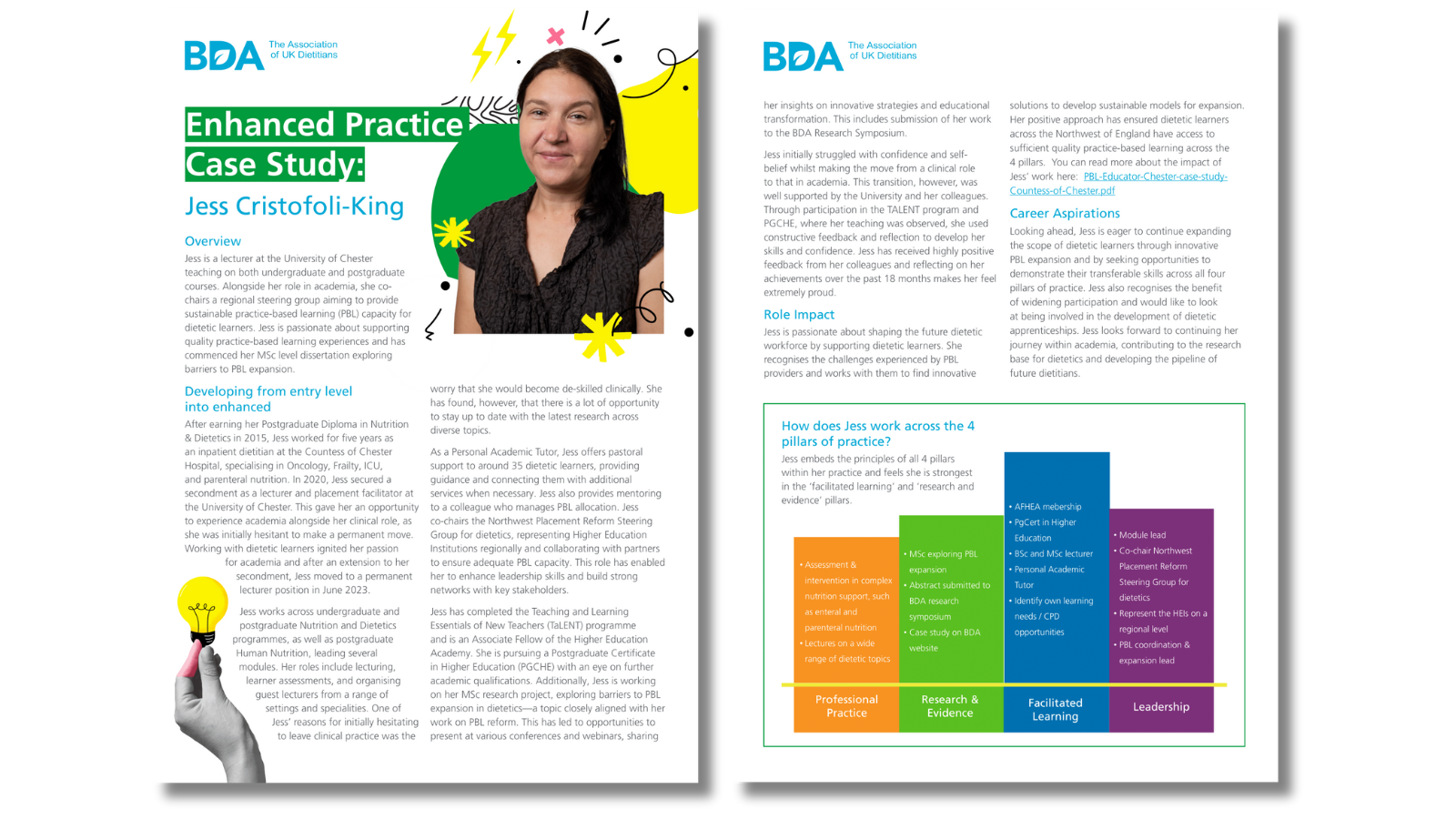
Jess - Lecturer
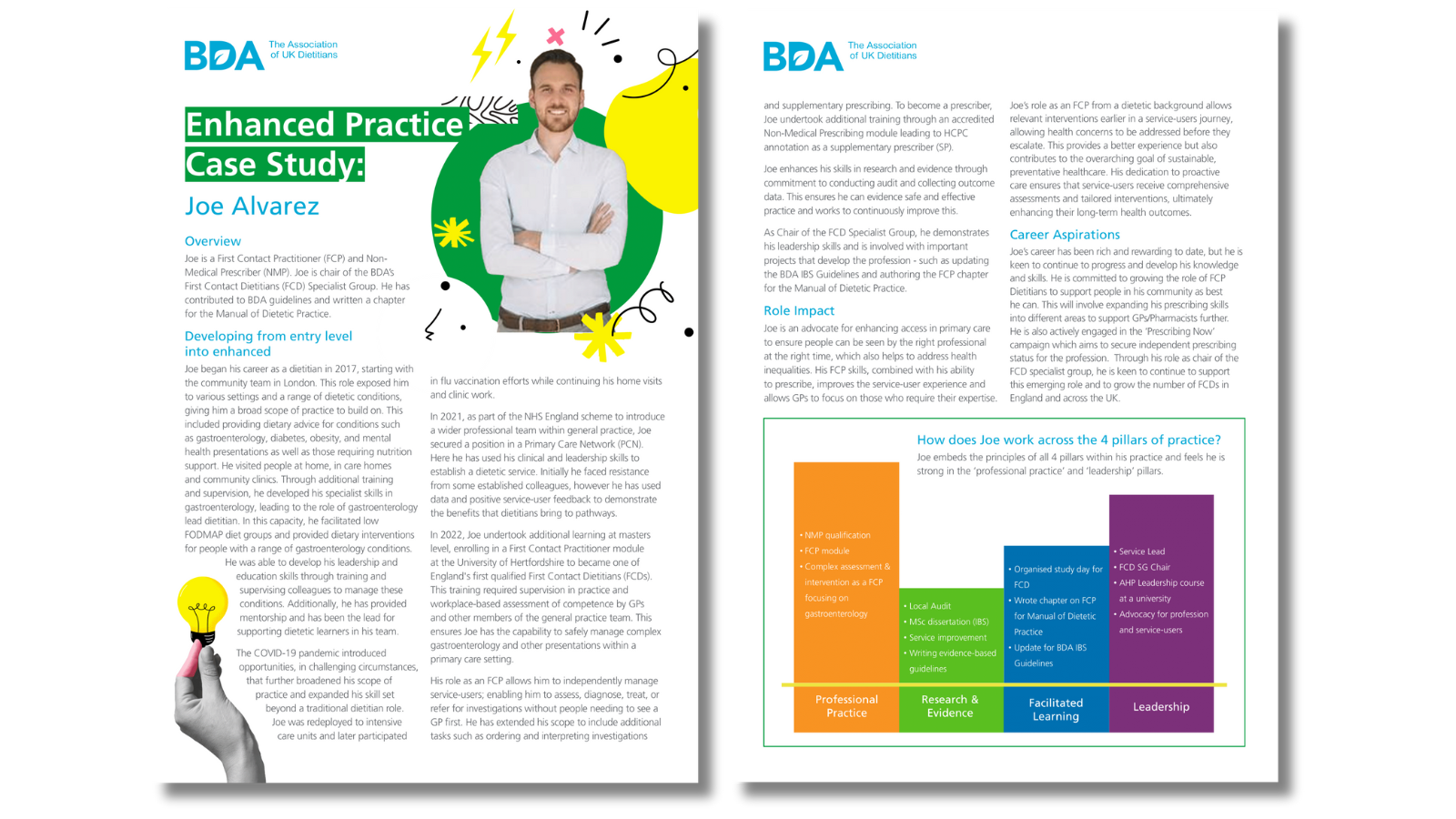
Joe - First Contact Practitioner
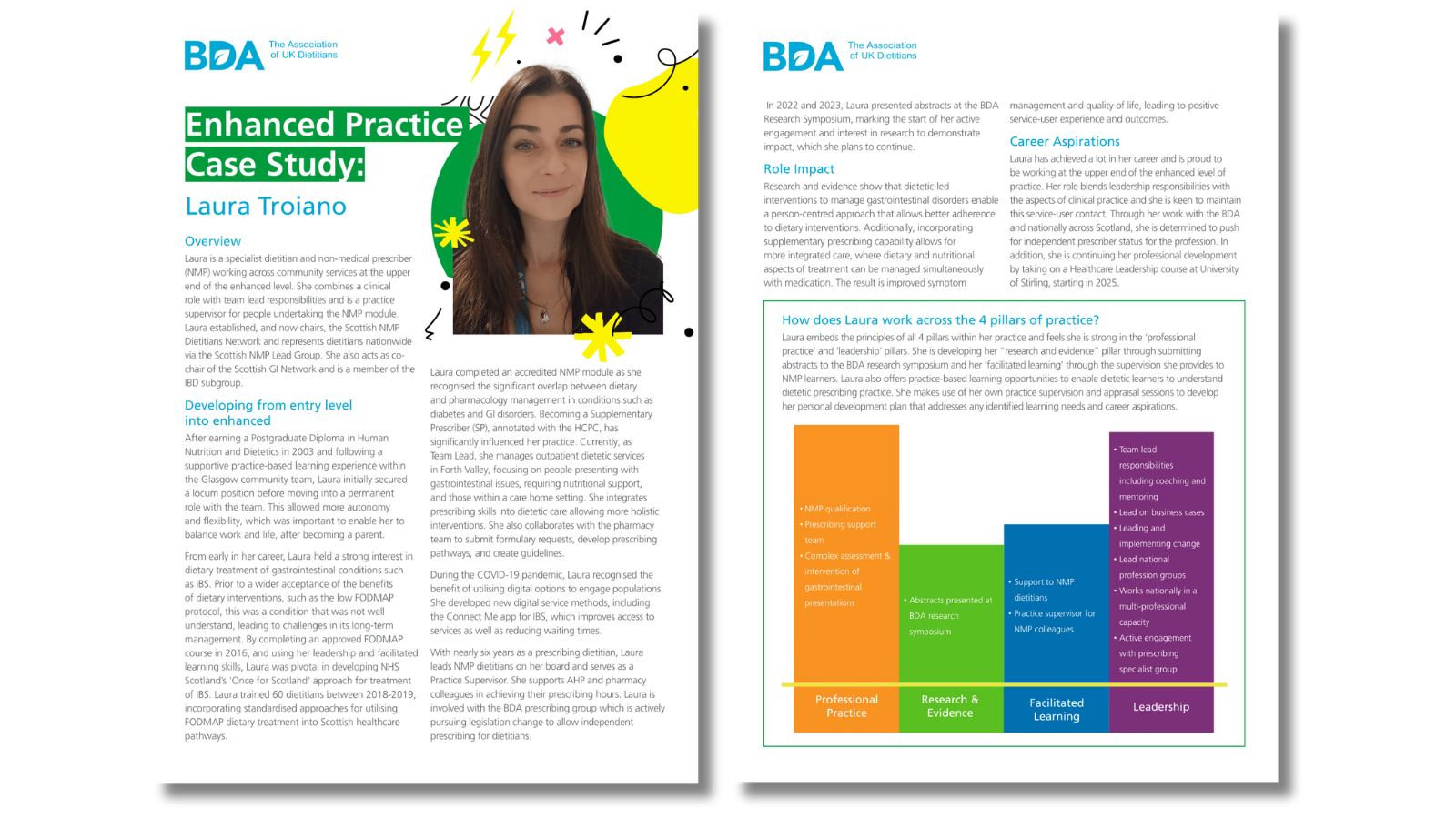
Laura - Specialist Dietitian and Non-medical Prescriber
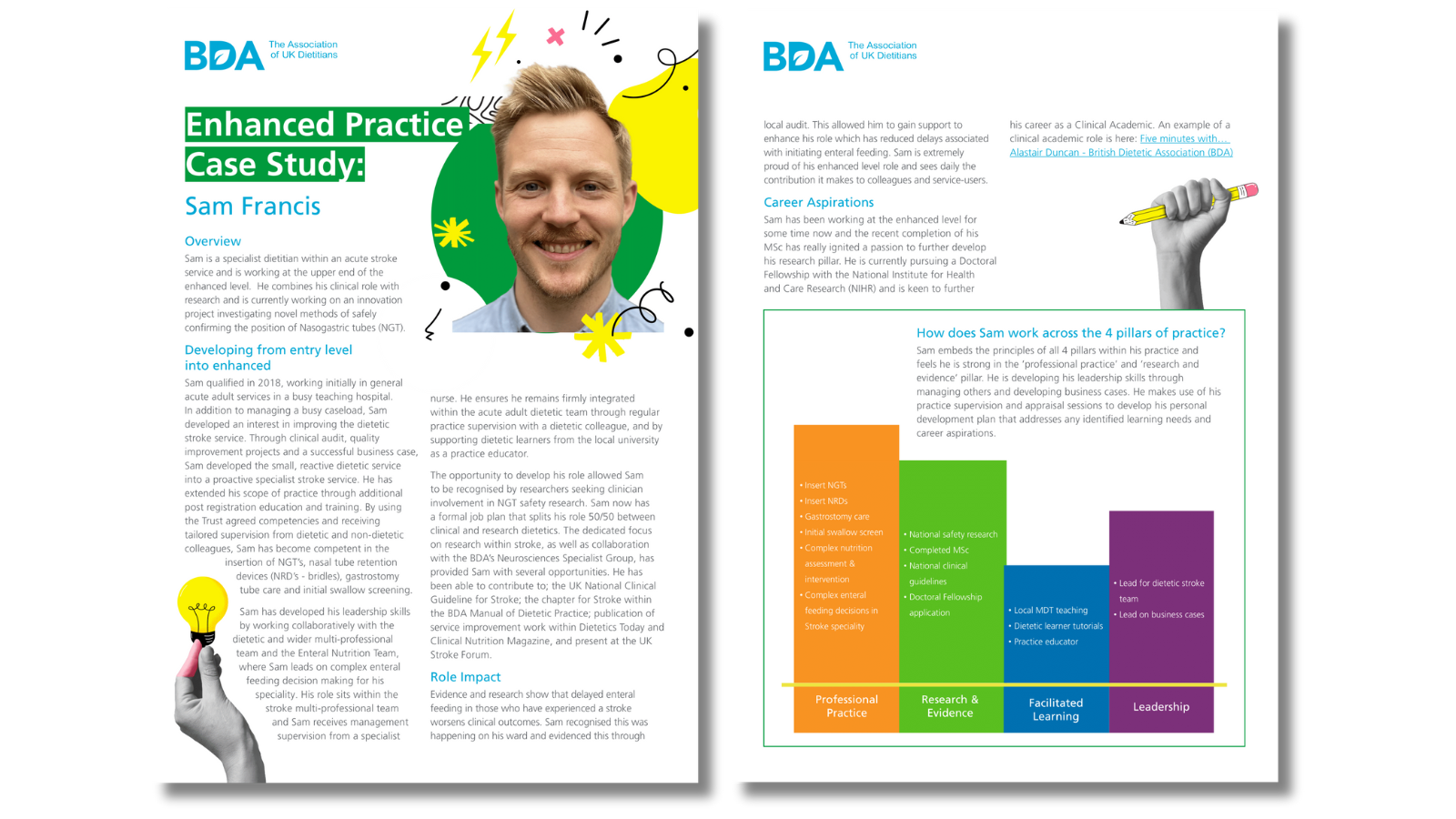
Sam - Specialist Dietitian
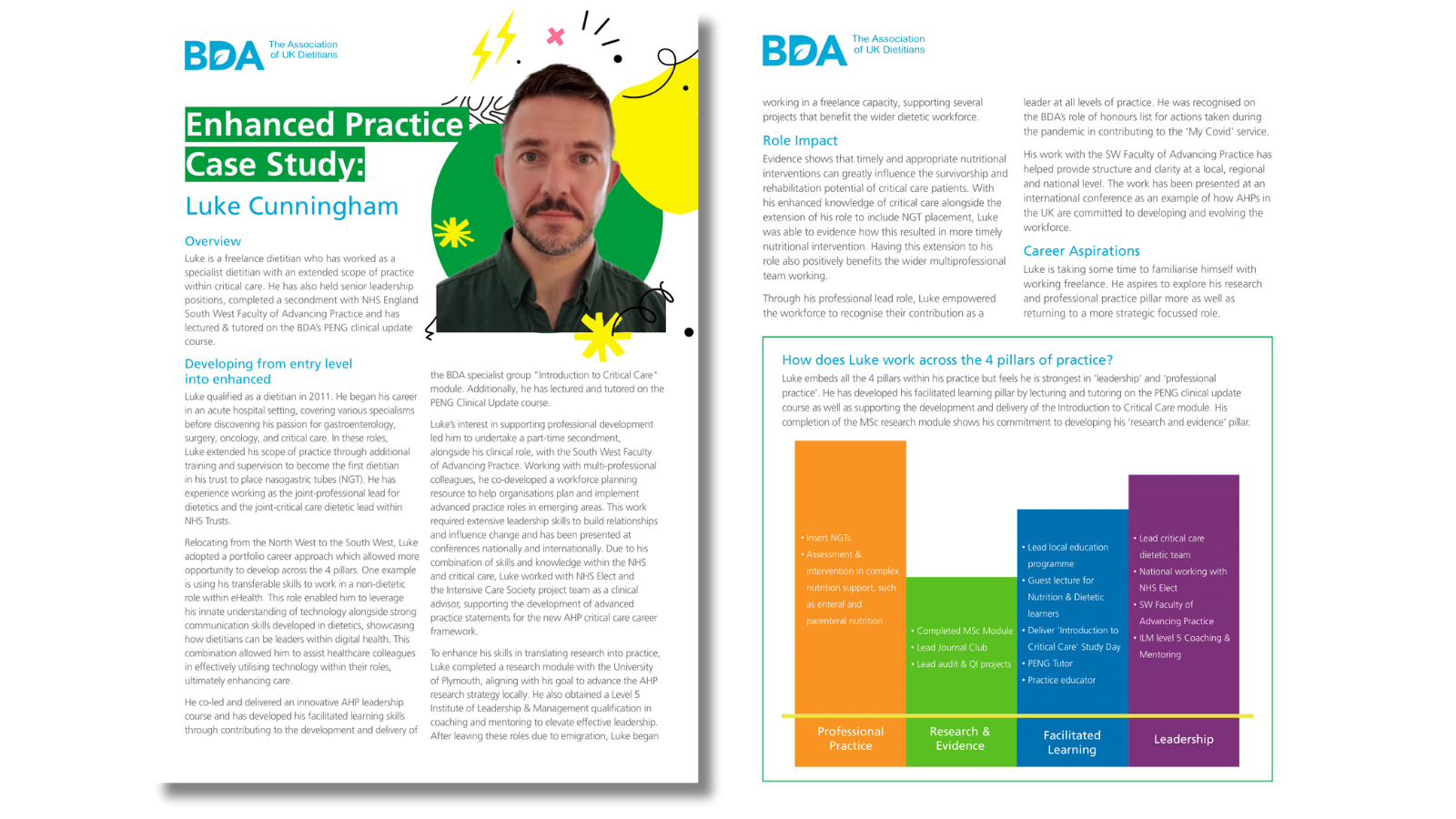
Luke - Freelance Dietitian
Beth - Mental Health Dietitian

Video case studies for other dietitians working at the enhanced level of practice can be seen here.