

Carbohydrates are a key nutrient along with proteins and fats in a healthy and balanced diet. Foods that contain carbohydrates also provide us with energy, vitamins, minerals and fibre, which are important for health.
However, eating too many processed carbohydrates has been linked to poor health, leading many people to believe carbohydrates are unhealthy. The truth is that many foods containing carbohydrates are nutritious and can form an important part of a healthy, balanced diet. The key is including nutritious carbohydrates in your daily meals instead of avoiding this important food group.
This food fact sheet looks deeper into the types of carbohydrates, their key roles in overall health and food sources.
What are the types of carbohydrates?
Carbohydrate-containing foods can be classified into the following categories:
Complex or starchy carbohydrates: These are typically higher in fibre and take longer to break down into glucose, leading to a more gradual increase in blood sugar levels (low glycaemic index foods). These carbohydrates are rich in vitamins, minerals and phytochemicals (chemicals found in plants). Examples include grains like barley, quinoa, oats, brown rice, bulgur wheat and starchy vegetables such as potatoes.
Simple carbohydrates: They are made up of smaller, simpler sugar molecules (tiny particles made when atoms join together).
This group can be further divided into naturally occurring sugars and free sugars:
- Naturally occurring sugars: These sugars are found in whole foods such as milk (lactose) and fruit (fructose). When eaten in their unprocessed forms, like whole fruits or Greek yoghurt, they are likely to contribute energy, essential vitamins (e.g. vitamin C) and minerals (e.g. calcium).
- Free sugars: These are sucrose, fructose or syrups added to foods during processing. Common sources include table sugar, sweets, cakes, soft drinks, honey and processed snacks. Free sugars are concentrated in glucose and lack essential nutrients. They are quickly broken down and absorbed by your body (high glycaemic index foods). Having too much of these free sugars in your diet can increase your risk of tooth decay, weight gain, obesity, type 2 diabetes and heart disease.
Dietary fibre: This is a non-digestible complex carbohydrate that can be classified into two types - insoluble and soluble.
- Insoluble fibre helps you go to the toilet, supporting you to poo regularly.
- Soluble fibre helps lower blood cholesterol, reduces straining when you go to the toilet for a poo and regulates blood sugar levels.
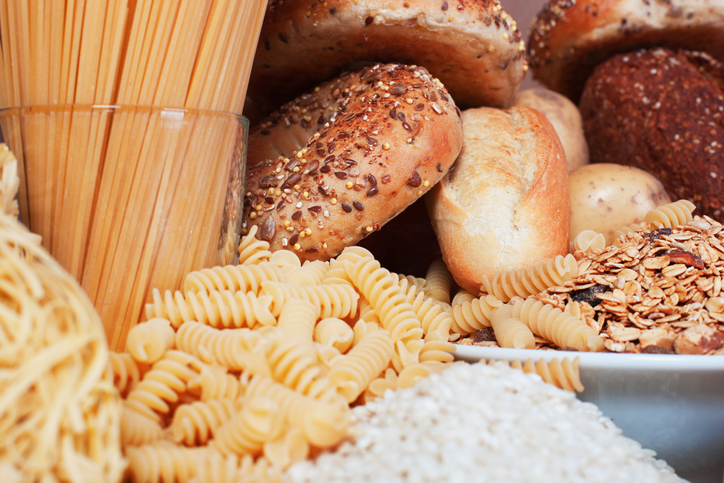
Overall dietary fibre promotes healthy bacterial growth in your gut and helps with weight management by keeping you fuller for longer. Foods rich in fibre include bran, wholegrains, vegetables, fleshy fruits and legumes (plants that have seeds within pods) including beans, peas, lentils, and peanuts.
If you are living with excess body weight, diabetes, cholesterol or constipation, you may need more tailored guidance about your carbohydrate intake. Contact your GP for a referral to a dietitian for additional support.
How can I include nutritious carbohydrates in my diet?
- Focus on complex carbohydrates
- Choose wholegrain cereals and grains (e.g. wholemeal, barley, rye, brown rice, quinoa, oat). Wholegrains are good sources of fibre but also of vitamins, specifically B vitamins, which enhance their overall health benefit.
- When including starchy carbohydrates as part of your meal, prepare and enjoy them in their natural form, e.g. potato and sweet potato with their skins. You can enjoy potato baked, boiled or roasted with the skin. Root vegetables such as carrots and parsnips are rich in carbohydrates, fibre, B vitamins and potassium.
- How to choose grains: Look for those that are made with 100% wholewheat flour or opt for those that list wholewheat, whole rye or some other wholegrain as the first ingredient on the nutrition label.
- When aiming to achieve your 5-a-day, try to choose whole fresh, frozen or canned fruit and vegetables without added sugar.
- Manage portion sizes. Generally, the size of your fist is an appropriate meal-time portion for carbohydrate-containing foods or size of fruit for a snack. This portion can then be adjusted depending on your activity levels.
2. Be aware of free sugars
- Minimise the intake of foods with added sugars like sweets, sugary drinks, cakes, cookies and processed snacks. Read food labels to spot added sugars (e.g. sucrose, high-fructose corn syrup).
- Dietary recommendations suggest that no more than 5% of your total energy should come from free or added sugars. In simple terms, this is around 30g or 7 teaspoons of sugar for the average adult.
- A can of regular fizzy and sweetened drink can have as much as 9 teaspoons of sugar in each can. If you enjoy sweetened drinks, try diluting no-added-sugar squash with sparkling water or choose a sugar-free drink as a treat.
- If you take sugar in hot drinks or add sugar to your breakfast cereal, gradually reduce the amount until you can cut it out altogether. As you reduce the amount, drizzle the sugar on top of your cereal.
- Unsweetened fruit juices and smoothies are processed forms of naturally occurring sugars. Limit the amount you have to no more than 150ml a day.
- Choose unsweetened cereal and try adding some fruit (sliced bananas, diced apple, berries, raisins) for sweetness, which will contribute to your 5-a-day.
- Always up for a sweet treat after a meal? Why not try a fruit salad, a handful of dried fruit or even a small amount of dark chocolate?
3. Increase your fibre intake
- To boost your fibre intake, add more vegetables, beans, peas, or lentils to your soups or salads and choose products that provide 6g or more fibre per 100g.
- Beans, peas and lentils are not only good sources of fibre – they are also low in saturated fat and high in folate, potassium, iron and magnesium. They are also a good source of protein and a substitute for animal protein.
Top tips
- Choose wholegrains over refined grains: Choose wholegrain breads, brown rice, quinoa, oats and barley instead of white rice or white bread.
- Choose fruits and vegetables, especially with skin, seeds and pips: Include a variety of whole fruits and vegetables instead of fruit juices or smoothies.
- Gradually increase fibre with each meal: If you’re not used to eating a lot of fibre, increase your intake slowly to help your body digest food more comfortably. Start with small portions of high-fibre foods and work your way up. Aim for 30g of fibre per day.
- Limit added sugars: Cut back on processed foods and drinks that contain added sugars (e.g. sugary drinks, cakes and sweets).
- Read labels for hidden sugars: When buying packaged foods, check ingredients lists for added sugars such as high-fructose corn syrup.
Source(s)
- Holesh JE, Aslam S, Martin A. Physiology, Carbohydrates. 2023. In: StatPearls [Website]. Available at: Physiology, Carbohydrates - StatPearls - NCBI Bookshelf [Accessed 19 November 2024]
- Public Health England (2016) Eatwell Guide. [Website] Available at: The Eatwell Guide - GOV.UK [Accessed 19 November 2024]
- Scientific Advisory Committee on Nutrition. Carbohydrates and Health. 2015. London: TSO. Available at: https://assets.publishing.service.gov.uk/government/uploads/system/uploads/attachment_data/file/445503/SACN_Carbohydrates_and_Health.pdf [Accessed on 17 November 2024]
- Blaak EE, Riccardi G, Cho L. Carbohydrates: Separating fact from fiction. Atherosclerosis. 2021. Jul;328:114-123.
- Clemente-Suárez VJ, Mielgo-Ayuso J, Martín-Rodríguez A, Ramos-Campo DJ, Redondo-Flórez L, Tornero-Aguilera JF. The Burden of Carbohydrates in Health and Disease. 2022. Nutrients: 14, 3809.
- Diabetes UK. Glycaemic Index and Diabetes. [Website] Available at: Glycaemic index and diabetes | Diabetes UK [Accessed on 20 November 2024]
- Foster-Powell K, Holt SHA, and Brand-Miller JC. International table of glycemic index and glycemic load values American Journal of Clinical Nutrition. 2022. Vol. 76(1):5-56
- Lejk A, Myśliwiec K, Jarosz-Chobot P. Effects of different types of meals on postprandial glycaemia in healthy subjects. Pediatric Endocrinology Diabetes Metabolism. 2024. 30(3):159-162.
- NHS. 2023. [Website] Available at: Sugar: the facts - NHS [Accessed 19 November 2024]
- Prada M, Saraiva M, Garrido MV, Sério A, Teixeira A, Lopes D, Silva DA, Rodrigues DL. Perceived Associations between Excessive Sugar Intake and Health Conditions. Nutrients. 2022 Feb 2;14(3):640.
- Diabetes UK. Carbohydrates and Diabetes: What you need to know [Website] Available at: Carbohydrates and diabetes: What you need to know | Diabetes UK [Accessed on 20 November 2024]
- Coker JK, Moyne O, Rodionov DA, Zengler K. Carbohydrates great and small, from dietary fiber to sialic acids: How glycans influence the gut microbiome and affect human health. Gut Microbes. 2021. Jan-Dec;13(1):1-18.
- Ford H and Frost G. Glycaemic index, appetite and body weight. Proceedings of the Nutrition Society. 2010. 69, pp 199-203
- Thomas B & Bishop J (eds) and The British Dietetic Association (2007). Manual of Dietetic Practice. Fourth Edition. Oxford: Blackwell Publishing. Chapters 2.4 Dietary Carbohydrate 2.5 Fibre and 3.13 Sports Nutrition
- Venn BJ and Mann JL. Cereal grains, legumes and diabetes. European Journal Clinical Nutrition. 2004. 58: 1443-1461
- Diabetes UK. Evidence-based nutrition guidelines for the prevention and management of diabetes. Diabetes Medicine. 2018. Vol. 35(5):541-547