

There are many different tests available to diagnose food allergy or food intolerance. It can be difficult to know which are reliable or based on science. This fact sheet will look at the tests available and whether they are evidence-based.
What is the difference between a food allergy and a food intolerance?
A food allergy is a reaction that involves your immune system, which is your body’s defence against foreign bodies (things that have come from outside your body). Reactions that do not involve your immune system are often called food intolerances.
Common food allergy terms
Medical terms for food allergy and intolerance can be confusing. Here are some common terms and what they mean:
Food hypersensitivity
Covers all abnormal reactions to food, including those described below.
IgE mediated food allergy
This reaction involves IgE antibodies, which your immune system produces. The signs and symptoms of the reaction can be within minutes or up to two hours later and can be severe. Conventional allergy testing and a detailed allergy-focused clinical history can help with diagnosis.
Non-IgE mediated food allergy
This reaction involves your immune system, but not IgE antibodies. Signs and symptoms of a reaction are delayed. Allergy testing is not helpful. Cutting out and then reintroducing the suspected food(s) can lead to diagnosis.
Non-allergic food hypersensitivity
This includes other types of reactions to food and food intolerances. Your immune system is not involved in these types of reactions.
Conventional allergy testing
These tests are evidence-based and performed by registered health professionals.
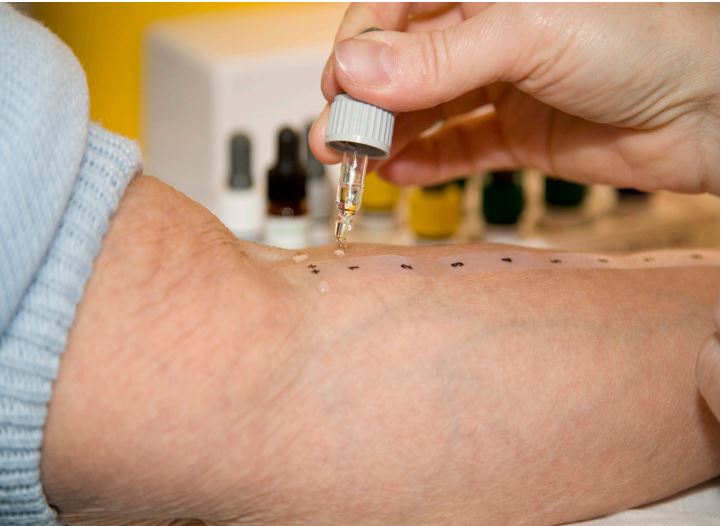
Skin prick test
A small amount of diluted allergen (the suspected protein that you are allergic to) is placed on your skin and your skin is then pricked. If a small swollen lump (weal) appears and your medical history indicates you may be allergic to the allergen, an IgE mediated food allergy may be diagnosed. This test is only performed under medical supervision.
Blood tests
A specific IgE test is carried out by measuring the amount of IgE antibodies to a suspect food in your blood. This is called a radioallergosorbent test (RAST). Your results can help give a diagnosis of IgE mediated food allergy. Your GP or hospital can organise this.
Commercial companies may offer a similar blood test called MAST (multi-allergen screening test). However, it is difficult to give an accurate diagnosis without your full clinical history.
Food challenges
You will be given the suspect food orally (in your mouth). The amount is increased gradually, and your symptoms will be watched closely. This test should be performed under medical supervision with resuscitation equipment available.
Food exclusion and reintroduction
You cut out the suspected food for a set period, and your symptoms are recorded. Then the food is reintroduced. If your symptoms improve when you cut out the food and return when it is reintroduced, this may indicate that the food is causing your symptoms.
This is best carried out under the supervision of a registered dietitian, especially if testing children. A well-balanced nutritional intake during the test period is important.
Alternative tests
There are many commercially available tests that claim to identify food hypersensitivities. However, these tests are not scientifically validated and can often recommend excluding a large number of foods unnecessarily. Following such restrictive diets can be challenging and may increase the risk of nutritional deficiencies, especially without support from a qualified healthcare professional to ensure nutritional adequacy and to help reintroduce foods safely where appropriate.
IgG blood test
This blood test looks at IgG antibodies to specific foods present in your blood. The test claims that an increase in IgG to a certain food indicates intolerance to that food. However, this isn't reliable, as IgG antibodies to food are found in all healthy people without food allergies.
Kinesiology
This is based on the idea that certain foods cause an energy imbalance in your body. This is detected by testing the response of your muscle. The therapist tests your muscle response when holding the suspected food in a small glass bottle. However, there is no scientific evidence that kinesiology can accurately diagnose food allergies.
Hair analysis
A sample of your hair is sent to a laboratory, where they scan the energy fields in your hair. Food hypersensitivity is identified by comparing your results with a database.
This testing is used for recreational drug use and for lead and mercury poisoning. However, its use in allergy testing is unproven and has no scientific basis.
The ATCAT (antigen leucocyte cellular antibody test)
Your white blood cells are mixed with the suspect food. Changes in the size of the white blood cells would indicate a problem with that food. White blood cells can respond to many factors, and studies have shown that test results are often inconsistent and not reproducible.
Pulse test
Your pulse is taken before eating the suspect food and then 15 minutes afterward. An increase of ten beats per minute is said to indicate food intolerance. However, this is not a reliable test for diagnosing food allergies. Heart rate can be affected by many factors, including anxiety, stress and physical activity and hydration status.
Electrodermal (Vega) test
This test measures electrical signals travelling around your body (electromagnetic conductivity). An offending food will show a dip in the electromagnetic conductivity. However, there is no scientific evidence that skin conductivity is related to food allergy, intolerance, or hypersensitivity.
Emerging food allergy tests
New and improved methods of allergy testing are currently being developed.
MAT (mast cell activation testing) has been studied since 2018. This blood test shows how mast cells react to specific food allergens. Studies show that this may be able to offer a more accurate allergy diagnosis.
BAT (basophil activation testing) is a laboratory test that measures a type of white blood cell in response to food allergens. Research has shown promising results in several studies, including for peanut and cow’s milk allergy.
Further research is needed before the tests are used routinely as a diagnostic tool.
Top tips
- If you think you may have a food allergy, seek medical advice. Your GP or dietitian will talk to you about the most appropriate and effective allergy testing.
- Alternative allergy testing should be avoided as it has no scientific basis.
- Dietitians can give you evidence-based nutrition advice tailored to your specific needs.
- Children should not follow a restricted diet unless supervised by a paediatric dietitian to ensure they keep growing and developing well.
Source(s)
1.Bulfone-Paus S, Bahri R, Custovic A, Korosec P, Tsoumani M, Barron M, Wu J, et al. Mast cell activation test in the diagnosis of allergic disease and anaphylaxis. J Allergy Clin Immunol. 2018;142(2):485-496.e16.
2.Piletta-Zanin A, Ricci C, Santos AF, Eigenmann PA. BAT and MAT for diagnosis of peanut allergy: a systematic review and meta-analysis. Pediatr Allergy Immunol. 2024;35(6):e14140. doi:10.1111/pai.14140
3. Bartha I, Boyd H, Foong R-X, Krawiec M, Marques-Mejias A, Marshall H F, Radulovic S, Harrison F, Antoneria G, Jama Z, Kwok M, Pietraszewicz E, Eghleilib M, Ricci C, Marrs T, Lack G, Du Toit G, Santos A F. The Basophil Activation Test Is the Most Accurate Test in Predicting Allergic Reactions to Baked and Fresh Cow’s Milk During Oral Food Challenges. Allergy. 2025;80(10):2861-2873. doi:10.1111/all.16675.
Kelso, J.M (2018). Unproven Diagnostic Tests for adverse Reactions to Foods. J Allergy Clin Immunol, Pract;6:362-365. www.bsaci.org 16/2/21