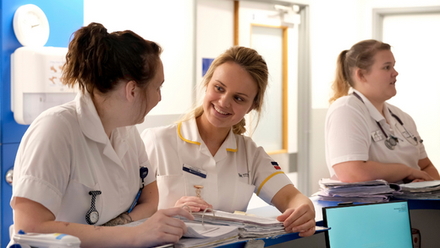
Sophie Drewett is studying a Master’s apprenticeship at Coventry University and has over three years of experience working as a dietetic assistant in oncology. Sophie recently spent the day shadowing in critical care and has written a blog to share her thoughts on the experience.
Recently I had the opportunity to spend the day shadowing in critical care - a specialist area I’m really interested in exploring further!
When people think of dietitians, they often associate the role with weight management and general healthy eating advice. While that’s definitely part of the profession, dietetics actually spans a wide range of specialities and critical care is one of them.
What do critical care dietitians do?
Critical care dietitians work with patients who are experiencing life-threatening illness or injury. During this time, the body’s nutritional needs change significantly.
Their role is to:
• Ensure patients receive the right amount of nutrition
• Deliver it at the right time
• Use the most appropriate method (e.g. oral, enteral or parenteral feeding)
They also support patients in their recovery, including guidance on eating and drinking after leaving intensive care.
What I learned during my day in the critical care dietetic department
Here are some of my key takeaways from the day:
• Hidden calories matter
Sedation medications like Propofol contain calories. These need to be included when calculating a patient’s total nutritional intake - something I wasn’t aware of before!
• Stress response affects blood glucose
Many patients present with high blood glucose levels on admission. This is often due to the body’s natural stress response to critical illness rather than underlying diabetes.
• Gut function can slow down
Sedation can reduce gut motility which can cause a variety of symptoms. Patients may require medications to support gastric emptying and digestion.
• Avoid overfeeding early on
In the initial stages of critical illness, careful feeding is essential. Overfeeding can be harmful, so nutrition is often introduced gradually and is closely monitored, particularly in the first week of admission.
• Protein needs are complex
Emerging research, including the EFFORT Trial, suggests that high protein provision may not always be beneficial. In some cases, particularly patients with acute kidney injury or severe organ failure, it may even be harmful. Therefore, protein requirements will differ for critically ill patients.
• Weight loss is expected
Even when patients are being artificially fed, weight loss is common due to immobility and the body’s stress response. Loss of both muscle and fat mass can occur.
And much, much more!
Final thoughts
This experience really opened my eyes to how complex nutrition is in critical care. It’s not just about feeding patients, it’s about carefully balancing their needs during a highly unstable and vulnerable time.
It also reinforced how diverse dietetics is as a profession. I’m excited to continue exploring different specialities and sharing what I learn along the way!
It’s also important to recognise that critical care can be a very emotional environment. Patients and their families are often going through one of the most traumatic periods of their lives. Because of this, shadowing in this area may not be for everyone - and that’s completely okay. However, it was a huge learning curve, both clinically and personally, and can be an incredibly valuable experience.
A note for student dietitians
As a student, never be afraid to ask questions! This is your time to learn and every question helps to build your understanding.
I’d recommend making the most of opportunities like shadowing and try to experience as many different specialities as you can. Dietetics can vary hugely between clinical areas and each setting offers something unique to learn.
The more exposure you get, the clearer your interests will become and the more confident you’ll feel stepping into practice.
I wish you the best of luck with your practice-based learning!