

Coeliac disease is an autoimmune disease (a condition where the body's immune system mistakenly attacks its own healthy cells, tissues and organs). This Food Fact Sheet will explain how it is diagnosed and how it can be managed.
What is coeliac disease?
When someone with coeliac disease eats gluten, the immune system attacks and damages the lining of the intestine, particularly the finger-like villi. This affects the gut's ability to absorb nutrients properly. If left untreated, it can lead to serious health complications.
The only treatment for coeliac disease is a strict, life-long, gluten-free diet.
Gluten is a protein found in wheat, barley and rye. These cereals are commonly used in breads, pasta, breakfast cereals, cakes, biscuits and pastries.
Who does coeliac disease affect?
Coeliac disease is common and affects around 1 in 100 people. It can develop at any age from babies starting their first foods to older adults who have previously eaten gluten without issue.
Genetics play a part, with a 10% chance of a close family member (parent, sibling or child) also having coeliac disease. However, it remains unclear why some people develop coeliac disease and others don't.
Nearly half a million people in the UK live with undiagnosed coeliac disease, which can negatively affect long-term health.
What are the symptoms of coeliac disease?
Before diagnosis and treatment, people may experience one or multiple symptoms with varying severity. These may include:
- Diarrhoea
- Abdominal pain and/or bloating
- Tooth enamel defects
- Weight loss
- Iron-deficiency anaemia
- Mouth ulcers
- Headaches
- Fatigue
Some individuals may also suffer from anxiety, depression, constipation, tingling or numbness in hands, feet or limbs, problems with walking or balance and infertility.
Importantly, some people have no noticeable symptoms when eating gluten, although intestinal damage still occurs.
A small number of people develop a very itchy, blistering rash that often appears symmetrically on the elbows, knees, back or scalp. This condition is called Dermatitis Herpetiformis and is confirmed by a dermatologist. It is treated predominantly with the same strict, life-long gluten-free diet.
What is the diagnosis for coeliac disease?
If you suspect coeliac disease, see your GP for a blood test. It is essential to continue eating gluten (at least one gluten-containing meal per day) for six weeks before testing and until all investigations are complete, to ensure accurate results. You may be diagnosed based on a blood test alone, but you may also require a camera test (endoscopy) to confirm the diagnosis.
What is the treatment for coeliac disease?
The only treatment for coeliac disease is a strict, life-long, gluten-free diet. Even small amounts of gluten can trigger an immune response and cause damage to the small intestine.
Adjusting to a gluten-free diet can feel overwhelming at first. Understanding which foods contain gluten and how to prevent cross-contamination is essential.
A dietitian can provide tailored support by:
- Suggesting suitable alternatives based on what you like
- Teaching you how to read food labels
- Advising on safe food preparation at home and when eating out
- Helping prevent gluten cross-contamination
- Ensuring you continue to get all the nutrition you need (including energy, fibre, folate, B12, calcium and iron)
Many foods are naturally gluten free and can still be enjoyed on a gluten-free diet:
| Food group | Naturally gluten-free examples |
| Fruit and vegetables | All fresh, frozen and tinned fruit and vegetables |
| Starchy carbohydrates | Potatoes, rice, cassava, corn, millet, buckwheat, quinoa, teff, oats (ensure they are labelled gluten-free) |
| Dairy foods and dairy alternatives | Milk, cheese, plain/ fruit yoghurt (without toppings), dairy alternatives |
| Protein-rich foods | Unprocessed meat, fish, beans, chickpeas, lentils, nuts, seeds, eggs |
Gluten is found in wheat, rye and barley, so always read food labels to avoid foods made with these cereal grains. Foods typically made with wheat flour, such as breads, pasta, breakfast cereals, cakes, biscuits and pastries, can be replaced with gluten-free alternatives available in supermarket free-from sections (including freezer and chilled areas). Gluten-free products are often more expensive. In some areas of the UK, gluten-free foods may be available on prescription though.
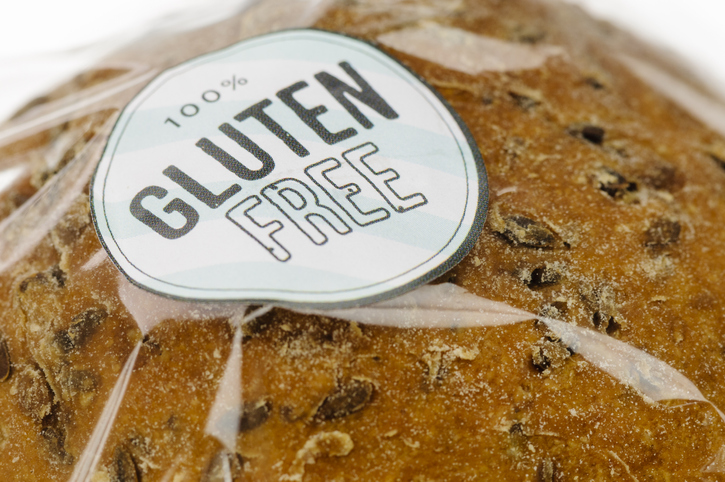
In the UK, foods labelled ‘gluten free’ must contain no more than 20 parts per million of gluten. This level has been shown to be safe for people with coeliac disease. Codex wheat starch (also called ‘gluten-free wheat starch’) may appear in some gluten-free products. The gluten has been further reduced during processing, and if the product is labelled ‘gluten free’, it is safe to eat. Similarly, some gluten-free products may contain barley malt. If the product is labelled ‘gluten free’, it remains safe.
The charity Coeliac UK offers valuable resources to help identify suitable products in all supermarket sections. Coeliac UK’s Crossed Grain symbol indicates a product that is gluten free. Products bearing this symbol undergo further certification, including gluten testing and independent audits of manufacturing processes.
What is gluten cross-contamination?
Gluten cross-contamination occurs when a gluten-free food comes into contact with gluten in the food preparation process.
Examples include:
- Using the same toaster for gluten-containing and gluten-free bread
- Cooking gluten-free chips in a fryer used for battered foods
- Using shared boiling water for pasta
- Contaminated spreads (e.g. butter or jam with crumbs)
Preventing cross-contamination is essential, as even small amounts of gluten can cause intestinal damage.
Oats are often contaminated with wheat, rye and barley during growing and processing. Therefore, only oats labelled gluten-free are suitable. A small proportion of people with coeliac disease may react to gluten-free oats. Discuss this with your dietitian if you think this may be your case.
Top tips
- Gluten-free bread often tastes better toasted or warmed. Try different brands as they vary in taste and texture
- Use a separate spread (butter, jam, margarine) to prevent cross-contamination
- Use toaster bags if sharing a toaster
- Focus on naturally gluten-free foods to help manage cost
- Take snacks or a packed lunch if gluten-free options may be limited
- When eating out, look for Coeliac UK GF accreditation. Accredited venues are audited and staff are trained in safe gluten-free preparation
- Call ahead when dining out and ask how food is prepared to ensure it is truly gluten-free
- Inform family, friends or your child’s school about the diagnosis to help them provide support
- Consider joining local or online coeliac support groups for practical advice, travel tips and recipe ideas
Source(s)
- NICE 2015. Coeliac disease: recognition, assessment, and management. Overview | Coeliac disease: recognition, assessment and management | Guidance | NICE (accessed 12/10/2026).
- Al‐Toma A, Zingone F, Branchi F, et al. European Society for the Study of Coeliac Disease 2025 Updated Guidelines on the Diagnosis and Management of Coeliac Disease in Adults. Part 1: Diagnostic Approach. United Eur Gastroenterol J doi:10.1002/ueg2.70119
- . Penny HA, Shiha MG, Raju SA On behalf of the Guideline Consensus Group, et al. The 2026 British Society of Gastroenterology guidelines on the diagnosis and management of adult coeliac disease. Gut doi: 10.1136/gutjnl-2025-337747
- https://www.coeliac.org.uk/information-and-support/living-gluten-free/the-gluten-free-diet/food-shopping/look-out-for-our-crossed-grain-symbol/ (accessed 12/10/2026).
- Patient information leaflet 2019, Dermatitis Herpetiformis, British Association Dermatology (BAD), UK. https://www.bad.org.uk/pils/dermatitis-herpetiformis-gluten-sensitivity/ (accessed 12/10/2026).
- Food and Agriculture Organization of the United Nations; World Health Organization. Standard for foods for special dietary use for persons intolerant to gluten. Codex Stan 118-1979. Adopted in 1979. Amendment: 2015
- https://www.coeliac.org.uk/blog/barley-malt-vinegar-and-barley-malt-extract/ (accessed 12/10/2026).
- https://www.coeliac.org.uk/gluten-free-accredited-venues/ (accessed 12/10/2026).