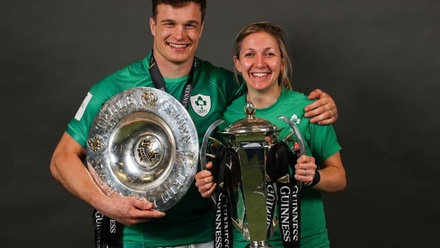
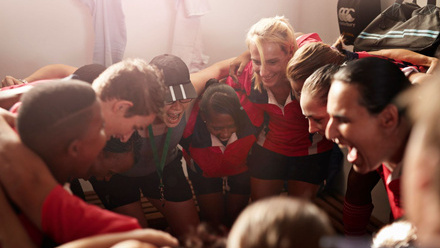
Dr Alan Kennedy speaks to Dr Tilly Spurr about her fascinating career path from investment banking in 1990s London to working in education and sport – alongside running a thriving coffee-roasting business.
Alan Kennedy (AK): Tilly, your working life began in finance, but your undergraduate degree wasn’t business or economics, but biological sciences.
Tilly Spurr (TS): Yes, I developed a love of biology at school, particularly the science of behaviour, and went on to complete a zoology degree at the University of Edinburgh in 1990, writing my dissertation on the effect of maternal environment on learning behaviour in mice. It was my ambition to work on environmental/wildlife projects but, like a lot of graduates around that time in a recession-hit UK, I struggled to find employment in my chosen field.
People suggested I try the City. I got a job as a graduate trainee in banking and moved to the trading floor in 1991. I switched companies a few times and moved from working on UK products and clients to European, and then to US. I travelled a lot and worked long days, often arriving at the office in the dark and leaving in the dark. There was a lot of eating out with clients, and frequent late nights followed by early-morning starts. We all knew it was harming us and the risk of burnout was real. I was made a director in 1994 and vice-president in 2000, but once I got married and had my first child, I realised continuing would be difficult. I left the City at the end of 2001, when pregnant with my second daughter.
AK: How and why did you gravitate back to health sciences, and a career in education and sports nutrition in particular?
TS: Working in the City had made me realise how important personal health and wellbeing is, and it gave me public speaking and sales experience – I think nutrition support is often sales!
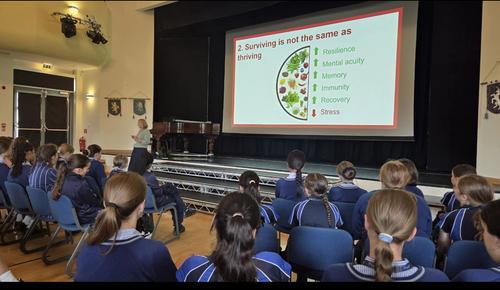
I returned to education in 2006 to undertake a part-time master’s degree in nutritional medicine at the University of Surrey. Around that time, I also started to volunteer in local schools, initially reading and teaching swimming. This moved on to paid roles in substitute teaching for science and maths.
Following graduation from Surrey, I started doing health and lifestyle talks, staff inductions and 1-to-1 sessions in corporate settings, such as banks, law firms and management consultancy companies. I also gave presentations at corporate dinners and conferences and took occasional GP referrals. This all worked around school runs and the increasing number of sports commitments for my two daughters.
In 2013, I entered the SENR graduate register and started doing more sports nutrition. I began to work more in schools and sports clubs and realised how much I liked teaching nutrition to young athletes.
I also became aware of how little research there was for young athletes and their parents, and I enquired about doing a PhD at the University of Chichester to research nutrition and performance in female adolescent athletes. I chose Chichester for its proximity to home and children’s schools, because they let you drive there and they didn’t charge bench fees! However, I quickly realised what a special place it is, and I’ve never left. Alongside my PhD, I began teaching, first in the education department and then in sport, health and dance.
In 2018, at the same time as I progressed onto the SENR practitioner register, I secured a two-year, part-time associate lecturer contract at Chichester. I also began working in the sport of basketball, initially supporting players around Ramadan. The following year, I completed my PhD studies and submitted my thesis, titled ‘Nutritional adequacy and physical performance in female adolescent hockey players’. My viva was delayed initially to 2020, and then to 2021, when I finally completed. One of my greatest sadnesses is that, although my thesis is available online, none of the studies has been published. This was initially because of Covid-19 and then time – there was always something else more urgent to do. Now, I feel adolescent sport and research has moved on, thankfully, making my conclusions, although groundbreaking at the time, a little outdated. I did, however, present some of the findings to a statistics conference in 2024, winning a prize!
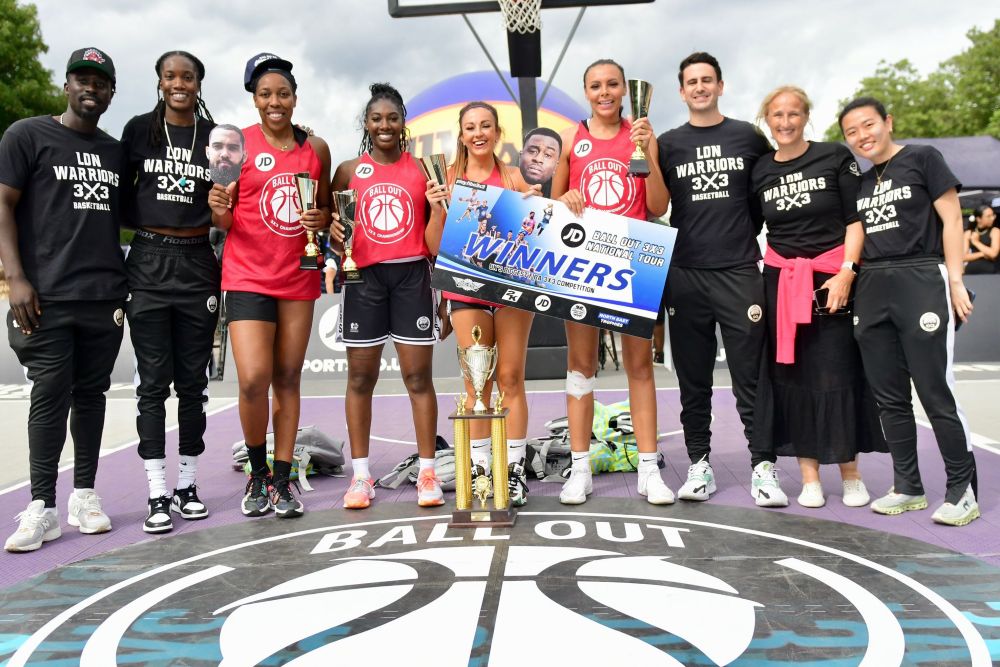
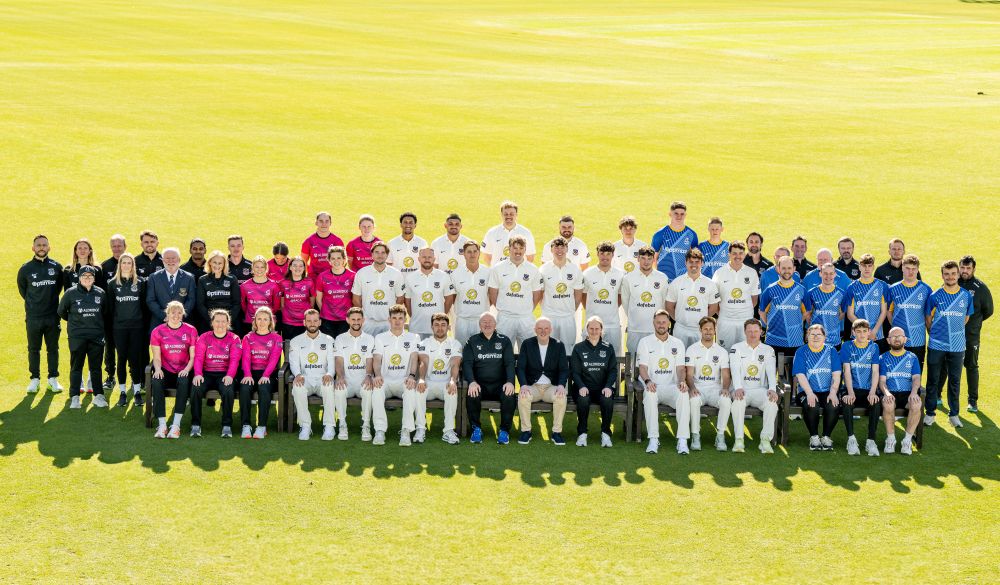
In 2020, I was granted a permanent part-time contract at Chichester. With Covid-19 restrictions in full force, my work in business and schools stopped, but my time was still occupied by teaching and working on our family business, which, during this time, was largely run by me, my husband and our two daughters. Covid allowed some time for reflection and, as everything opened up again, I moved my sports nutrition practice away from young developing athletes to senior athletes and teams. I currently have contracts with the LDN Warriors 3x3 Team, Basketball England, Sussex Cricket and Oxfordshire Cricket, as well as working with clients across lots of other areas. In a recent count, I’ve worked in more than 40 sports, covering every letter of the alphabet except Q, X, Y and Z. I have worked a lot with sailors, though, which I guess could be yachting, and in eventing and fell running, which could both be x-country. I’m definitely on the lookout for a Q and Z, though!
AK: Your family business is called Cast Iron Coffee Roasters. Tell us more!
TS: In 2014, my husband, Guy, and I founded a coffee roasting and hospitality business in West Sussex.
Cast Iron Coffee Roasters specialises in developing strong relationships with coffee farmers and coffee drinkers. My sister is a coffee and honey farmer in Panama, and everyone who works at the roastery has a real passion for coffee. We spend a lot of time searching for and profiling the very best beans, and we light roast to keep as much of the subtlety of flavour within the end coffee as possible. We always have some sensational filter coffees, as well as beans roasted for espresso.
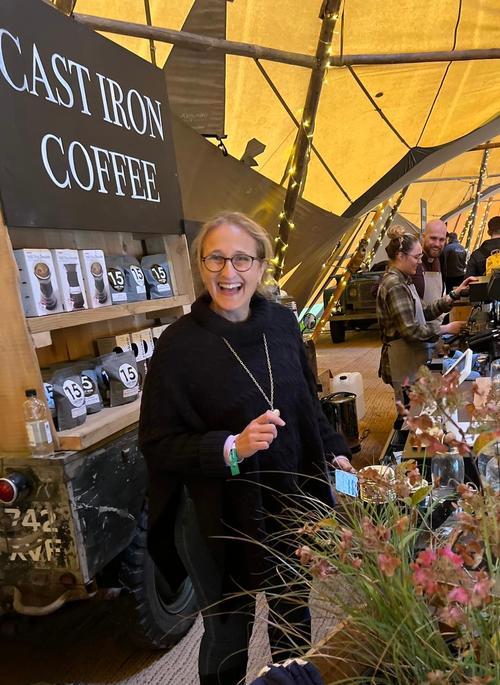
Being involved with the running of Cast Iron has given me much greater knowledge about food quality, production costs, catering contracts and food hygiene than I might otherwise have had, which has been pretty useful. As the interest in coffee within sports and sports venues has grown, it’s also been very handy to know more than most about coffee varietals, roast profiles, grind types and brew methods, and what they do to the end product.
I’m incredibly proud of the business and the growth we have seen.
AK: As an educator and practitioner, can you describe your philosophy and approach to these roles?
TS: Within my teaching, my approach is very applied. I want students to understand not just what the research says but how that knowledge can be practically included into an individual’s life. I use a lot of case studies and examples from the media, and try to link my key messages to real-life people or scenarios.
One of my favourite roles is being a placement supervisor and module lead on our Applied Sport and Exercise Nutrition MSc, which is accredited by the SENR. We have been running this applied master’s for seven years and, for me, mentoring these students does not end when they leave Chichester. I run an alumni group, have regular meetups and love to hear from and support ex-students as their careers progress. Living vicariously through them has been a great pleasure and has hugely increased my knowledge and love of sports nutrition.
As a practitioner, what I love is the awkward – working in forgotten sports, or with population groups where there isn’t much research support from existing practitioners or money. Also, disciplines such as e-sports and chess – which are not always included as sports. I also love working on the optimal nutrition for a specific tournament or overseas campaign, researching what is available away from home and the best ways to test this out.
When working with athletes, I focus on small changes that are achievable. I never want to be seen as judgemental and I do a lot of research to try to understand the demands of their sport and any other demands on the individual. I’m lucky that I have access to equipment and lab space at the university if I need it. Optimal nutrition has to cover training and competition but also every other part of an individual’s life. This is often forgotten, particularly for young or female athletes who are not full-time and can be doing considerable activity away from the sport on which you and the coaches are focusing. I have studied and now supervise students doing PhDs in behaviour change (in football), and although the models can sometimes seem cumbersome, their structure is incredibly valuable. It’s not possible to just ‘educate’ someone out of behaviours that may be detrimental to their performance; the reasons why they have the behaviour need to be understood – the so-called barriers and enablers.
AK: What are some of your barriers and enablers towards effective practice?
TS: Time is probably my biggest barrier. In my early career, when I specialised in working with young athletes, I was often given a lot more time than I now get with elite teams. As I am juggling several jobs, this can be even worse, with the people I need to see unavailable on the days I’m available. I try to be as flexible as possible and, if feasible, meet athletes in a place that is convenient for them, or catch up online. I also try to keep meetings short – which is hard!
Another problem with no real solution is social media and self-promotion by social media. This has been something that I have spoken to MSc students about for more than a decade and really impacts work with athletes. No one really has any idea how to judge people working in sports nutrition outside of what they say they have done. I try to tell students and athletes that there are many fantastic nutritionists and dietitians who are working silently, doing amazing things, and many are so busy they have no time to post. Some early students now admit I might be right, having started with a busy social media presence but no clients, and now having a low social media presence but lots of clients. We must stop judging practitioners’ ability by the number of followers they have.
For the profession as a whole, I guess my biggest frustration is the lack of statutory regulation within nutrition and sports nutrition, and the lack of a protected title for nutritionists. Messaging from the BDA and SENR is right – so much damage can be done by poor nutrition advice, and we need to prevent people going to unqualified or alternative practitioners. However, there are hundreds of well-trained, degree-qualified nutritionists who are being jumbled with people who only have a 10-day or alternative medicine course. We need to have this discussion within the profession, as only having one pathway to a protected title through dietetics is promoting short-cuts and an unnecessary struggle for people with the right qualifications to give excellent advice. I don’t have a strategy or solution but try to educate about the differences wherever possible.
AK: What have been your career highlights to date?
TS: I was so proud – and relieved – to finish my PhD. I’m really proud of the MSc students from the University of Chichester and how well they are doing. It’s also amazing to see several of the young athletes that I coached now competing in senior squads and teams.
Getting the Oxfordshire cricket job was also a good moment. It’s the only advertised job I have got in nutrition, and I’ve applied for more than a few, mostly without getting to interview. It’s a sad fact that many sports jobs are still going by word of mouth, even when advertised.
AK: Who were the key people, or what were the key experiences, that have guided your educational and career journey?
TS: I have a really great network of people, with whom I speak quite regularly, who are working across sport – they are too numerous to mention by name, but they will know who they are. I’m really grateful for their time.
There are a few who need a special mention, though. Professor Margaret Raymond, who allowed me onto the MSc in Nutritional Medicine at the University of Surrey, and although she often joked about the ‘banker’ not totally getting it, she was always very kind and helpful. Professor Mark Willems, at the University of Chichester, who agreed to supervise my PhD, even though the first proposal was wildly ambitious and impractical, and has continued to be a great sounding board. Dr Penny Rumbold and the staff at Northumbria University, who accepted me into their SHEN research group and have taught me so much.
Outside academia, I have had so many amazing experiences and worked with lots of incredible athletes and practitioners who have helped me loads, but special mention must go to Nate Lucas, who introduced me to basketball and the British basketball community. Without working for LDN Warriors, Basketball England and the
GB Basketball junior teams, I don’t think I would have had the opportunities I have had since then, or made as many great friends.
AK: What ambitions do you have for the future of your professional practice and working life?
TS: I would like to see a major Games from the inside. The Commonwealth Games in 2022 was amazing, but it was impacted by Covid-19 bubbles and, although I had good access to the team, I didn’t get to see the holding camp or inside the team village. I would also like to travel with a team – I have been with teams at away games in the UK but have not done a training camp abroad. Not really ambitions but tick-sheet/bucket-list things.
AK: Finally, Tilly, what value does BDA membership and registration with the SENR have for your professional practice?
TS: SENR practitioner status gave me my job in academia and has allowed me to work at the top level of sport. I’ve met many brilliant people at SENR events, and attended BDA and SENR taught sessions online and in-person. These have all been fantastic. Access to professional indemnity insurance is also very reassuring, particularly as I am doing more workshops.