Growing up in London, I was exposed to a wide range of cuisines, including those of the Black diaspora. My heritage is both African (Ghanaian) and Caribbean (Jamaican). Growing up, I was more exposed to Caribbean cuisine, which continues to influence my cooking today.
I've found that this understanding of food and culture has helped me in my dietetic practice and in connecting with colleagues. However, it is important not to make assumptions about people's diets and preferences. Honouring our communities starts with listening, building relationships and ultimately, trust.
This year, I've been thinking about how far we've come as a profession and reflecting on my own experience as a Black dietitian. I've also been wondering what the experiences were like for the Black dietitians whose shoulders I stand on. Our history is important.
To me, honouring our communities means coming together in different ways. I enjoy connecting with other dietitians and I feel the same about connecting with the communities we serve.
Representation across the profession
Although there were perhaps fewer Black dietitians and leaders in the profession than I would have hoped, seeing those who were represented encouraged me as a student and early-career dietitian. Although I am an introvert by nature, I hope that by being visible, I can encourage others on their own journey.
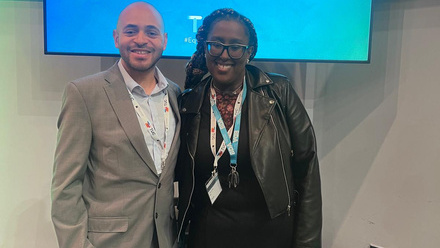
The importance of this struck me again recently when listening to BDA colleague Sharia Lindo speak about Black representation in leadership at this year's TUC Black Workers Conference.
I do believe we need to move beyond representation to ensure we have a profession where Black dietitians always feel they belong. I would even suggest that this sense of belonging is what sustains a career. People need to feel valued, supported and able to progress.
What does it mean to honour the communities we serve?
Yes, we need to celebrate the individuals who sustain and progress our communities but we also need to find more ways to come together. I don't have all the answers but I see the power in collective action.
Collaborating with fellow dietitian Tadala Kolawole on a BDA social media post for Know Your Numbers Week highlighted the role of traditional foods, cultural identity, socioeconomic circumstances and health inequalities. It also reinforced the importance of listening to patients rather than making assumptions about their needs.
Turning good intentions into action
I have also seen dietitians take action. Sickle cell disease disproportionately affects Black communities, and Dr Claudine Matthews' work in sickle cell nutrition highlights the importance of challenging barriers, reviewing whose voices are heard and ensuring inclusion is reflected in everyday practice and organisational decisions.
An annual conference is also held to bring professionals together to address these issues. Real, practical action! I wasn't able to make it this year due to illness but I will certainly be at the next one.
The power of connection and conversations
Just the other day, during a home visit, I connected with a service user over a picture on their wall depicting Caribbean fruits. It was a small moment but one that reminded me how food can create connections and open up conversations.
As dietitians, we can all make a conscious effort to build connections with one another and the communities we serve. Take the time to listen, learn from each other's experiences and understand what matters to the people we work with. Small, everyday actions can make a real difference in helping people feel seen, heard and valued.