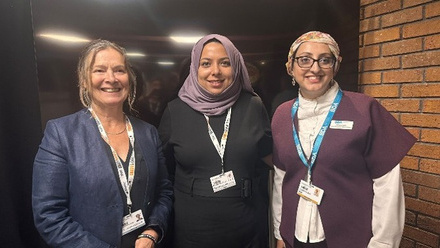
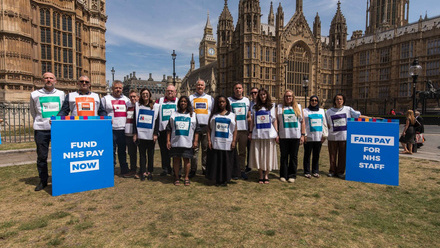
While representing the BDA at the TUC Black Workers’ Conference, David Simms spoke in support of a motion tackling racial discrimination in maternity services.
As part of my ongoing voluntary work with the BDA, I had the privilege of attending the Trades Union Congress (TUC) Black Workers’ Conference in Bournemouth, alongside BDA colleague Sharia Lindo, National Employment Relations Officer.
Held over three days, the conference brought together trade union representatives, activists and leaders from across the UK to discuss the issues affecting Black workers and to shape the future direction of the trade union movement. Although delegates represented many professions and sectors, there was a shared commitment to promoting equity and challenging discrimination at work.
For me, the conference was professionally and personally inspiring. It provided an opportunity to hear passionate speakers, learn from colleagues across the wider trade union movement, and reflect on how we can continue to strengthen equality, diversity and inclusion within our own profession and workplaces.
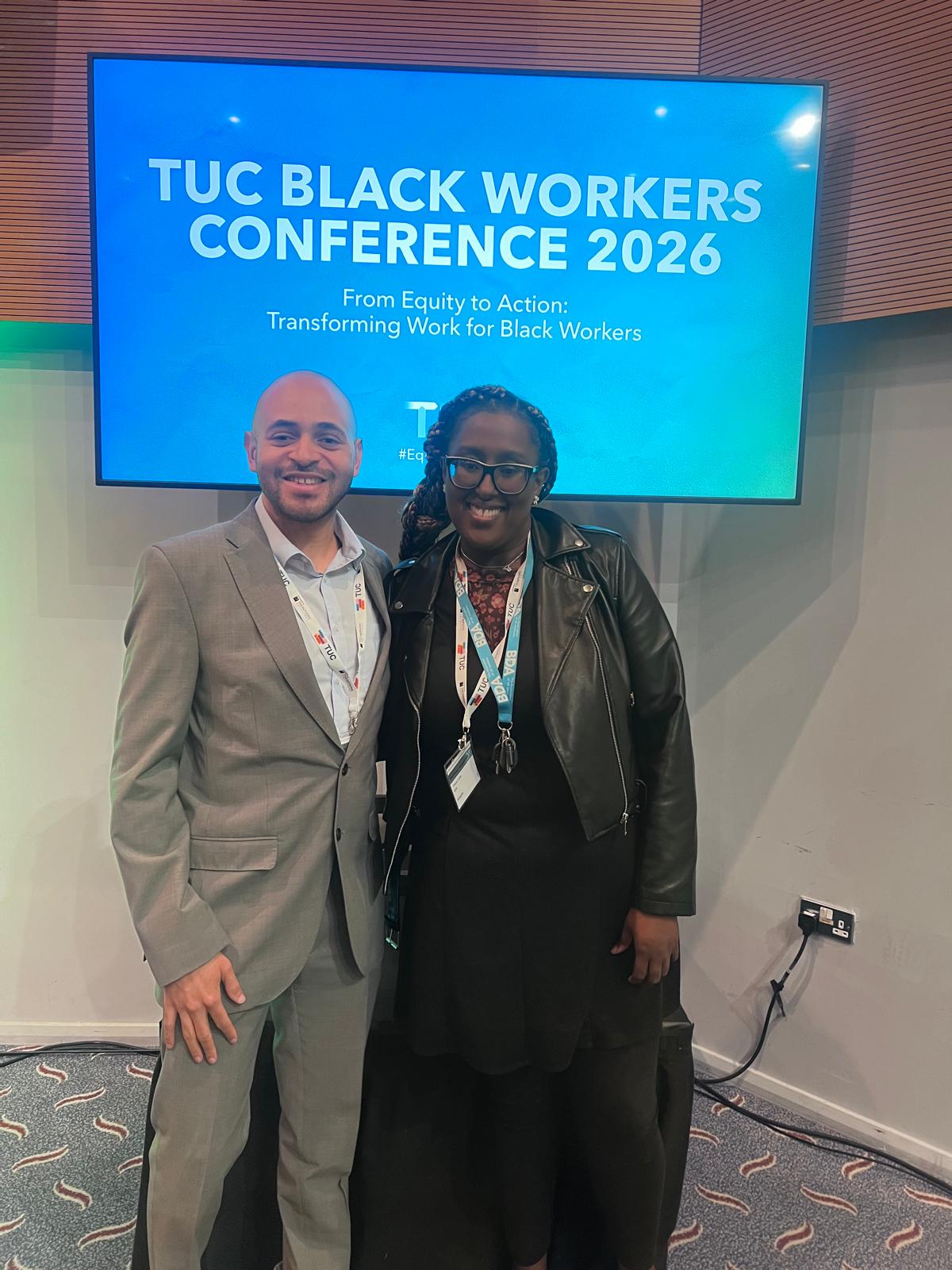
David and Sharia Lindo, BDA National Employment Relations Officer
As dietitians, we are committed to reducing health inequalities and improving outcomes for the communities we serve. However, achieving equitable healthcare also requires an inclusive workforce in which every member of staff feels valued, respected and able to thrive. The conference reinforced that tackling workplace inequality is fundamental to delivering safe, compassionate and high-quality patient care.
Throughout the event, delegates debated motions covering racial inequality, leadership, employment rights and workforce development. I was proud to speak in support of a motion which focused on tackling racial discrimination in maternity services.
The motion highlighted the evidence that Black midwives and maternity support workers experience disproportionately high levels of racial discrimination, bullying, harassment and disciplinary action within the NHS. These experiences are sadly not unique to maternity services. Across healthcare, Black staff continue to report poorer workplace experiences, including discrimination, barriers to career progression and lower levels of psychological safety.
The motion called for practical action, including stronger partnership working to identify and share culturally appropriate good practice, dedicated investment in education and training on race and racism, clear escalation processes so staff can raise concerns without fear of victimisation, and embedding equality within the NHS Core Skills Training Framework.
One of the strongest messages reiterated in the conference was that improving staff experience and improving patient care are closely connected. Inclusive workplaces are more likely to retain skilled staff, encourage innovation and create psychologically safe environments in which people can raise concerns, collaborate effectively and provide the highest standards of care.
For the BDA, participation in the TUC Black Workers’ Conference is an important opportunity to ensure the voices of dietitians are represented within the wider trade union movement. It also enables us to bring back ideas, build relationships with colleagues from other unions, and contribute to national conversations on equality, diversity and inclusion.
I would like to thank the BDA for supporting my attendance and, in particular, Sharia Lindo for her encouragement and expertise throughout the conference. Sharia also spoke in support of a motion on increasing diversity in senior leadership, highlighting another important area in which sustained action is needed.
Looking ahead, there is an exciting opportunity to strengthen the BDA’s engagement with future TUC Black Workers’ Conferences. We hope to see a larger BDA delegation attending and, ultimately, to submit a motion on behalf of the association.
This would provide an opportunity for the dietetic profession to contribute directly to national discussions on equality, diversity and workplace culture.
I left the conference feeling optimistic. While significant challenges remain, the commitment, expertise and passion demonstrated by all delegates showed that meaningful progress is possible. As dietitians, we have an important role not only in tackling health inequalities, but also in helping to create workplaces in which everyone feels valued, respected and able to reach their full potential.